
In a bustling auto repair shop, time is money. Every minute wasted hunting for a diagnostic lead translates directly to lower bay turnover. Modern cars have evolved into "computers on wheels," and without efficient Diagnostic Tools, technicians are essentially working in the dark.
Usually, if you want professional-grade diagnostic power, you're forced to choose between a multi-thousand-dollar device and steep annual subscription fees. The core question we face is simple: In the fast-paced reality of the shop, does that expensive brand premium actually translate into equivalent efficiency?
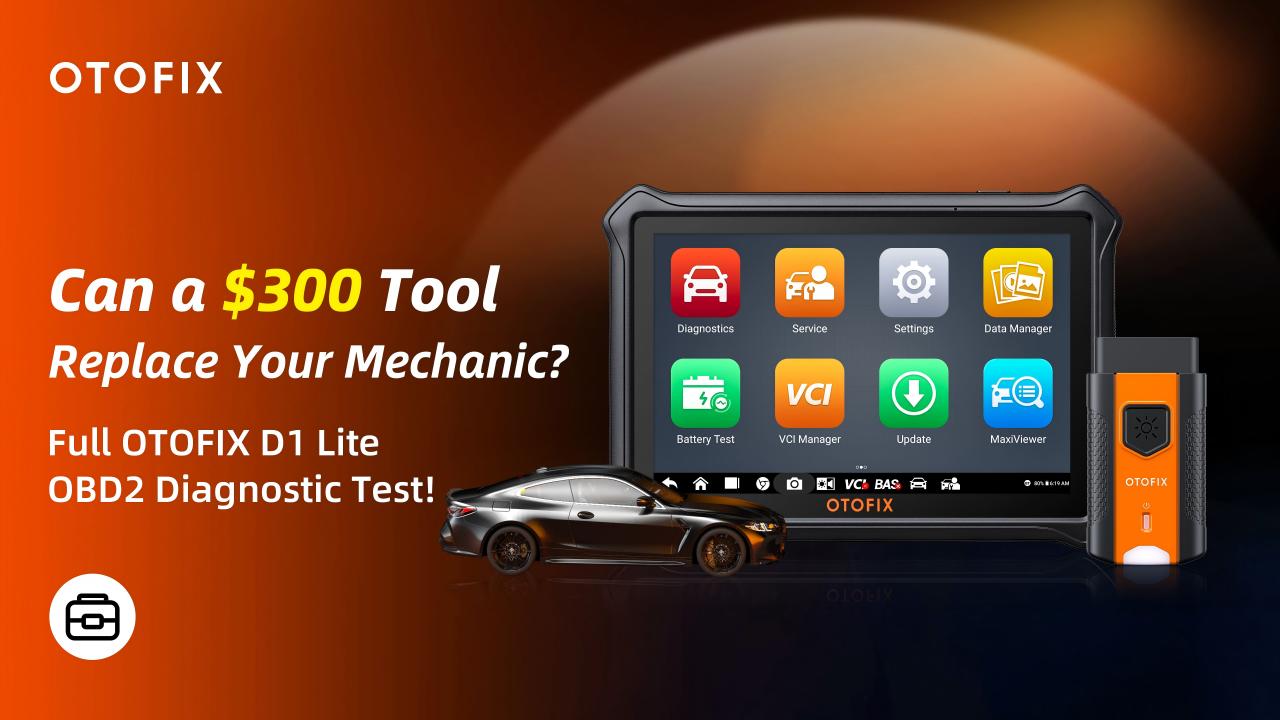
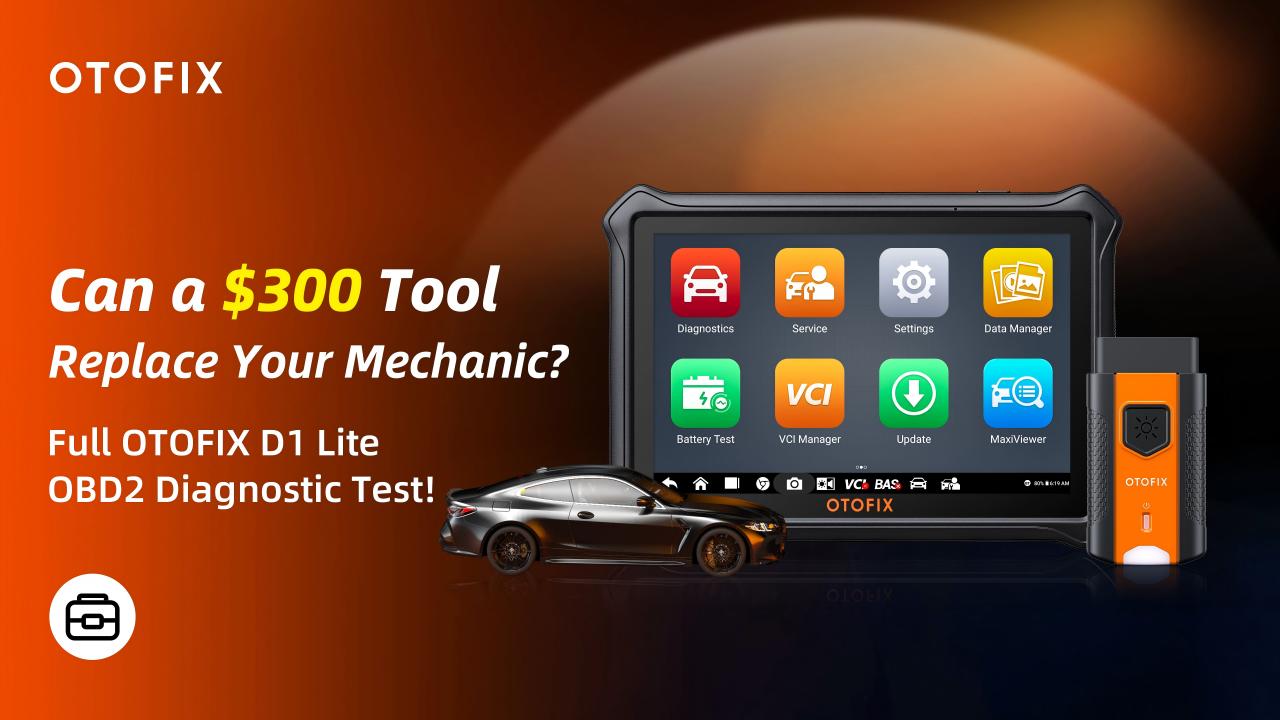
To find out, we threw a $400 OTOFIX D1 Lite into a real-world workshop environment to see how it handles a typical day of diverse repair scenarios.
Scenario 1: An Efficient Throttle Matching for a Supercar
A 2024 Lamborghini Revuelto just had its throttle body cleaned and now requires a Throttle Valve Adaptation.
In the past, working on Exotic Cars like this was often a headache. Technicians had to lug out bulky specialized laptops, hook up external power to prevent voltage drops from crashing the system, and dig through hidden menus in proprietary software. A simple mistake could mean starting over.
The OTOFIX D1 Lite Performance:
-
Quick Response: Once plugged in, the tool used Auto VIN to identify the car quickly and jumped straight into the engine system.
-
Streamlined Workflow: No external power required. The tech found the "Throttle Matching" function within a few taps on the intuitive Android interface and executed it with one click.
-
The Clock: Preparation and research used to eat up 20 minutes; now, the entire adaptation is done, and the car is ready for delivery in under 5 minutes.
For any shop, that kind of speed means you're clearing the bay for the next ticket much faster.
Scenario 2: Deep Scans and Gremlins
A modified 2019 Honda Civic rolled in with a Check Engine Light. The owner complained that the Earth Dreams engine felt sluggish.
The technician found a P420 (Catalyst System Efficiency Below Threshold) stored as a Permanent Fault. The challenge with these issues is using a tool that can only "read codes" without offering any real "analysis."
The OTOFIX D1 Lite in Action:
-
Deep Data Streams: The tech pulled up Live Data to monitor the O2 sensors and catalytic converter performance in real-time.
-
Status Verification: By checking the Readiness Monitors, the tech confirmed if the vehicle had completed the necessary drive cycles, ensuring the fault was truly cleared.
-
Punching Above Its Weight: Despite costing a fraction of high-end Autel or Launch units, the D1 Lite’s functional coverage hits about 70-80% of what those "pro" devices offer.
This level of depth means a tech doesn't have to go hunting through the warehouse for an expensive multimeter or oscilloscope just to verify a simple live data point.
The Verdict: How Much Time Does It Actually Save?
The OTOFIX D1 Lite isn't just a basic tool to "check codes."
-
For the Pro Tech: It's an excellent "Sidearm." For daily Maintenance tasks like battery registration or brake resets, it saves you from the tedious boot-up and connection times of heavier equipment.
-
For the Shop Owner: Spending $400 to get nearly $4,000 worth of diagnostic capability is smart cost optimization.
If you're hesitating over paying for Pro-grade Branding, the OTOFIX D1 Lite is proof that highly capable diagnostics don't have to carry a high-end price tag. In 2026, smart shops are boosting their Arsenal with high-ROI tools like this.
Stay curious, stay diagnosing. Are you willing to pay a premium for that final 20% of niche features, or would you rather use that cash to upgrade your other shop equipment? In a real workshop, the answer is usually right in front of you.